 By David Robinson
Most engineering companies waste money on social media. They post on TikTok. They create Instagram reels. They dabble in Facebook ads. And they see absolutely nothing come from it.
The problem isn't that social media doesn't work for B2B organisations; it's that most engineering companies are trying to be everywhere instead of somewhere. They treat social like a checkbox. Post something, anything, across multiple platforms and hope a lead appears.
That approach fails because engineering companies don't buy on Instagram. They don't scroll TikTok to find industrial equipment. And they definitely aren't making procurement decisions based on a random YouTube video. These platforms have a part to play, but that isn't lead gen.
What B2B businesses do is this. They research on LinkedIn, read technical content, engage with thought leaders in their space, follow companies that interest them, and check out profiles of people they might work with. 80% of B2B social media leads come from LinkedIn, compared to 13% from Twitter and 7% from Facebook. LinkedIn is where the engineering world actually hangs out, and it's where you need to show up.
In this post:
- Why LinkedIn is the only platform that matters for your engineering business
- What to post that actually gets attention from the right people
- The frequency question (and why consistency beats perfection)
- Who should be posting from your company
- How to actually get engagement (and why vanity metrics don't matter)
- Building a real strategy instead of just posting stuff
- The bottom line
- Frequently asked questions
Why LinkedIn is the only platform that matters for your engineering business
LinkedIn works for engineering companies because it's built for professional B2B interaction. The platform has over 1.2 billion members, with 310 million monthly active users. 89% of B2B marketers use LinkedIn for lead generation, and 62% say it actively produces qualified leads. Every person on the platform is there for one reason: to network or find business opportunities. They're not scrolling mindlessly like they are on other platforms.
Your target audience is already there. CEOs of engineering firms, plant managers, procurement officers, and engineers looking to advance their careers. Decision makers with actual budget authority. They're not on TikTok wondering about engineering solutions; they're on LinkedIn looking for exactly what you offer.
The numbers back this up. LinkedIn generates leads at 277% the rate of Facebook and Twitter combined. Its visitor-to-lead conversion rate sits at 2.74%, compared to Facebook's 0.77%. For B2B companies, 40% of marketers say LinkedIn is their most effective channel for high-quality leads. No other social platform comes close.
The algorithm also favours professional content. You don't need fancy production, you don't need to be funny or viral, you need to be knowledgeable, clear, and authentic. And that plays to the strengths of most engineering companies.
We've watched engineering firms spend thousands a month trying to build presence on platforms where nobody relevant is spending time. Then they abandon LinkedIn because they didn't see immediate results there. It's clear wrong think. Social is only one piece of the picture anyway, and if you want the wider view, our take on why marketing is everything your business does is worth a read.
LinkedIn is where you focus, not because it's trendy or because everyone tells you social media is important, but because it's where your customers actually are and actually pay attention.
What to post that actually gets attention from the right people
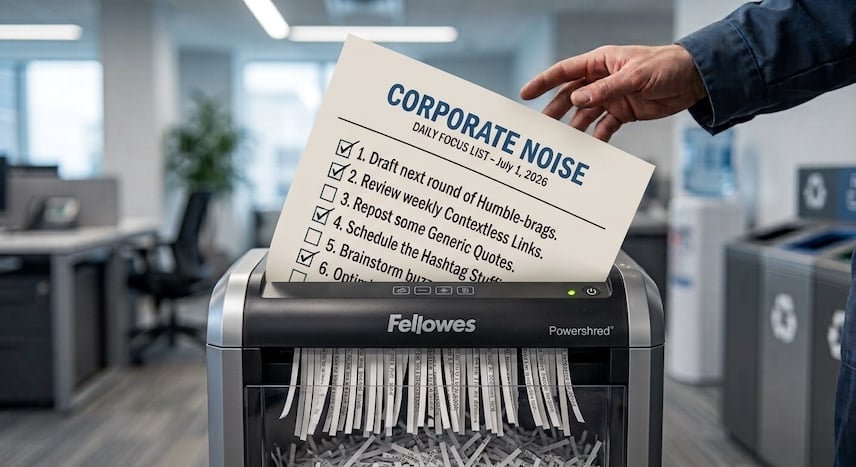
Here's what doesn't work on LinkedIn for engineering companies: generic inspirational quotes. Reposted articles with no context. Company announcements that nobody cares about. Hashtag stuffing. Fake humble-bragging.
Here's what does work: insights from your experience. Problem-solution breakdowns specific to your industry. Data and case studies that prove your point. Commentary on industry trends. Honest takes on challenges in your sector.
You need to post content that makes someone in your target industry stop and think, "That's useful. That's something I've actually dealt with. This person knows what they're talking about."
The best posts on LinkedIn from engineering companies tend to fall into a few categories. First, thought leadership. Your senior team members sharing what they've learned over 20 years in the industry. Not polished corporate messaging. Real lessons. Real failures they've learned from. Real methods that work
 .
.
Second, technical breakdowns. Explain something complex in clear language and show how you solve a common problem. Walk through a process that other companies struggle with, engineering audiences respect depth and clarity. This is the same thinking that drives good content marketing for engineering companies, your social posts and your blog should pull in the same direction.
Third, honest industry commentary. Something annoying about procurement processes? Say it. Something wrong with how people approach a particular engineering challenge? Call it out. Disagreement with conventional wisdom? Post it. People respect opinions more than they respect generic praise.
Fourth, case studies and results. Not sanitised client testimonials. Actual numbers. What was broken, how you fixed it, what changed. The context matters because it shows you understand real-world implementation, not just theory.
Fifth, behind-the-scenes content. How you actually work. What a typical project looks like, what your team is doing, the equipment you use, and the processes you follow. This humanises your company and proves you're not just talk.
Format matters too. Carousel posts average a 6.60% engagement rate on LinkedIn, well above the platform average. Video generates around 5 times more engagement than static image posts. Even a simple document carousel walking through a technical process will outperform a wall of text.
The frequency question (and why consistency beats perfection)
You don't need to post every single day. That's a myth that applies to Instagram, not LinkedIn. For personal profiles, 2-3 posts per week is the sweet spot. For company pages, 3-5 per week works well. Data from Buffer's analysis of over 2 million posts shows that moving from 1 post per week to 2-5 generates an average of 1,182 additional impressions per post.
What matters far more than frequency is consistency. Post every Tuesday and Thursday for a year and you'll build a following. Post randomly whenever you feel like it, and you'll build nothing. Accounts that post consistently see 5.6 times more follower growth than those posting irregularly. The algorithm rewards accounts that show up regularly.
Consistency also tells people they can expect something from you. They start looking for your posts. They start engaging regularly. Over time, your content performs better because engagement builds engagement on LinkedIn. It's a slow burn, much like SEO, and if you've ever wondered how long B2B SEO takes, the honest answer there applies here too: the firms that win are the ones who keep showing up.
We'd rather see an engineering firm post one good post per week than five mediocre ones. But if you can do two solid posts a week without running out of ideas, that's where you'll see real traction.
Who should be posting from your company
This matters more than people think. Your company's main account gets some engagement. But your team members' personal accounts get significantly more. Research from Refine Labs found that personal profiles drive 2.75 times more impressions and 5 times more engagement than company pages. Some studies put the gap even higher, at up to 8 times more engagement for personal accounts. LinkedIn's algorithm prioritises content from humans over faceless corporate accounts. It rewards personal connections.
Your CEO should be posting, your technical directors should be posting, your sales leads should be posting. Not about themselves but about what they know, what they've learned and what they see happening in the industry.
This builds a personal brand for those individuals and simultaneously builds a brand for your company. When someone visits a director's profile and sees consistent, knowledgeable content about your industry, they're more likely to trust your company too.
There's a compound effect here too. Company pages with active employee advocates see engagement rates 89% higher than those relying on corporate content alone. So it's not just that personal profiles outperform company pages, the two work together.
The barrier for most engineering companies is that their leadership team thinks posting is beneath them or not their job. But it's exactly their job. They're the experts. People want to hear from them. And it's one of the most effective ways to build credibility in your space.
How to actually get engagement (and why vanity metrics don't matter)
LinkedIn engagement is strange; sometimes a post gets three likes, sometimes a similar post gets three hundred. There's no exact formula. But there are patterns.
Posts that ask questions tend to perform better than statements, posts that challenge conventional thinking perform well, posts that are specific to a niche perform better than generic posts, posts that don't end with "thoughts?" still work.
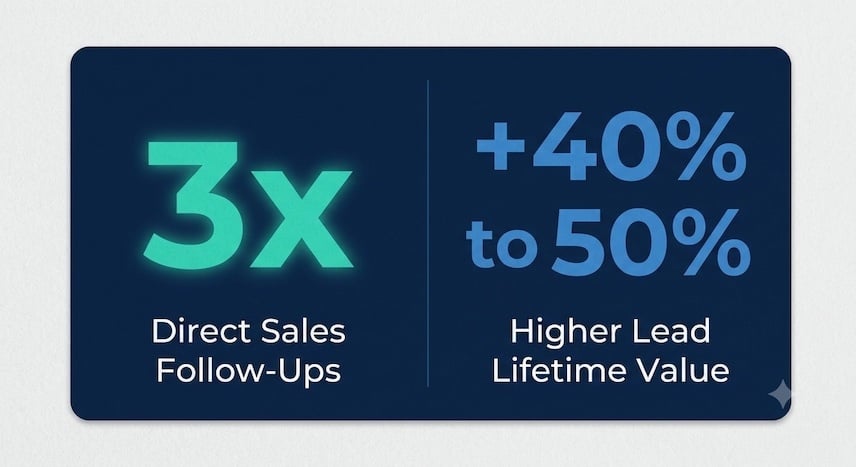
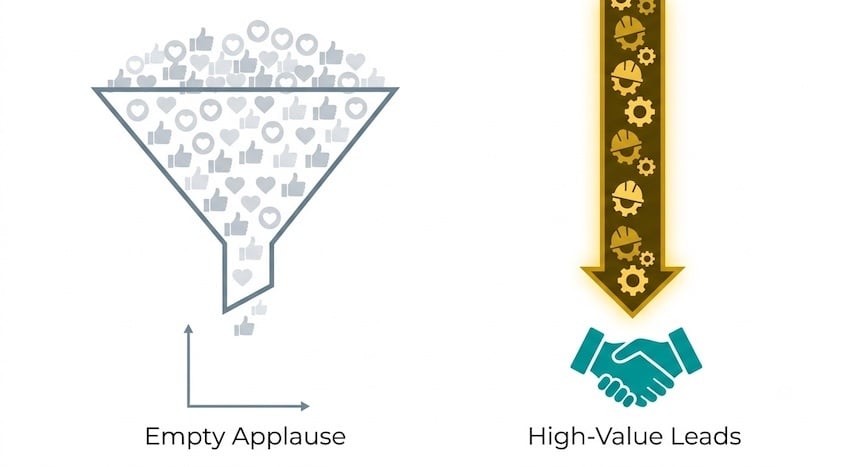
The number of likes doesn't matter. We're serious, an engineering company could get ten likes from the right people and generate five leads from those ten people. Another company could get a hundred likes from unrelated accounts and generate nothing. LinkedIn leads are 3 times more likely to result in direct sales follow-ups and show 40% to 50% higher lifetime value than leads from other social networks. Engagement matters only if it's from the right people.
This is why you need to be specific about what you're posting. Post about the challenges of implementing automation in small manufacturing facilities, and you'll get fewer overall likes than a generic post about manufacturing innovation. But those likes will be from plant managers and operations directors who are actually interested in solving that problem. That's the whole point of business to business lead generation, a handful of the right conversations beats a stack of irrelevant applause.
Track leads that come from LinkedIn. Track which posts lead to conversations and opportunities. Those are your metrics. Not engagement rate, not follower count, actual business impact.
Building a real strategy instead of just posting stuff
This is where most engineering companies fall apart. They don't have a strategy, they have a tactic, post content, hope something happens and when nothing happens, blame LinkedIn.
A real LinkedIn strategy means deciding what you want to be known for in your industry. What problems do you solve that others don't? What's your actual differentiation? What does your ideal customer struggle with? What expertise should your company be famous for?
Then you build a content plan that reflects those things, not random posts about whatever, regular content that reinforces your positioning and demonstrates your knowledge.
You need to understand who you're talking to. Engineering company LinkedIn audiences vary enormously. A firm targeting multinational automotive suppliers has a completely different target than one selling to small mechanical engineering practices. Your content needs to match who you're trying to reach.
If you're not sure where to start, we can help. As an engineering marketing agency, we've built social media strategies for dozens of engineering and industrial companies. We know what resonates with these audiences and what gets ignored. We can help you figure out what to post, how often, and whether to do it yourself or have someone else handle it.
You can read more about how we approach B2B social media content on our services page.
The bottom line
Your engineering company probably shouldn't be on most social platforms. You should be on LinkedIn. You should post regularly. That content should demonstrate real knowledge, not corporate fluff. It should come from actual people at your company, not a faceless brand account.
Done right, LinkedIn becomes a real business development tool. Not flashy. Not viral. But effective. Get in touch if you'd like to discuss.
Frequently asked questions
Which social media platform is best for engineering companies?
LinkedIn, by a distance. Around 80% of B2B social media leads come from LinkedIn, compared to 13% from Twitter and 7% from Facebook, and it converts visitors to leads at roughly 2.74% against Facebook's 0.77%. Engineering decision makers research and network there, so it's where your time and budget should go rather than spreading yourself thin across TikTok, Instagram and the rest.
How often should an engineering company post on LinkedIn?
For personal profiles, 2-3 posts a week is the sweet spot; for company pages, 3-5 a week works well. Consistency matters far more than volume, accounts that post regularly see around 5.6 times more follower growth than those posting at random. One genuinely useful post a week beats five rushed ones.
Should company pages or employees post on LinkedIn?
Both, but lead with people. Personal profiles drive roughly 2.75 times more impressions and up to 5 times more engagement than company pages, because LinkedIn's algorithm favours humans over faceless brand accounts. Your CEO, technical directors and sales leads posting about what they know builds credibility for the individuals and the company at the same time.
What should engineering companies post on LinkedIn?
Content that proves you know your field: thought leadership from your senior team, technical breakdowns that explain complex problems clearly, honest industry commentary, and real case studies with actual numbers. Carousels and video tend to outperform plain text, so package that expertise in formats people engage with.
Do likes and followers matter for B2B lead generation on LinkedIn?
Not really. Ten likes from the right plant managers and operations directors can generate more business than a hundred likes from unrelated accounts. LinkedIn leads are about 3 times more likely to result in direct sales follow-ups and show 40-50% higher lifetime value, so track leads and conversations rather than vanity metrics like engagement rate or follower count.
Sources: