We’re a digital marketing agency, but we believe in going above and beyond for the businesses we work with. We know that visitors and leads are only helpful if they turn into paying customers, and while it's often tempting to lay blame for low close rates on our clients, we know that it’d be remiss of us to do so without trying to help them solve the problem.

That’s why we encourage most of our clients to set up dedicated customer relationship management (CRM) software to help them manage their sales process – and close those all-important leads. If you need a heads-up, here's a post that explains CRM software.
Wait, It’s Not My Job To Close Leads...
If you’re a CMO, a marketing lead or a marketing manager, you may be wondering what close rates have to do with your job. Customer relationship management normally falls under the purview of the sales department, and we marketing folk get to weigh our success using much more forgiving KPIs. Organic traffic, enquiries generated or conversions driven.
But times are changing fast. The rising popularity of RevOps and the increasing ease with which sales data can be connected to our traditional analytics means that more and more marketing managers are being assessed based on the revenue they generate; the pounds and dollars that land in your company bank account instead of abstract metrics that fail to provide any real insight into the quality of customer – or lead – driven by our increasingly elaborate campaigns.
Consider this Forbes report, which highlights that many companies are now setting up cross-departmental teams designed to bridge the gap between marketing and sales, so revenue-generating activities can be monitored effectively. Or this article from Six and Flow, which points to a 300% increase in the number of RevOps job listings posted on LinkedIn.
Is it fair to measure the success of a marketing campaign using blunt and contextless stats like sales closed or revenue generated? Maybe not, but that’s a topic for a different post. For now, just remember that improving your conversion and close rates will make it much (much) easier to justify your marketing spend – and ask for a bigger budget come Q4 2021.

That’s Where A Good CRM Comes In
Imagine if every form filled automatically generated a customer profile on a platform your whole team could access from anywhere in the world. Imagine if that same platform automatically imported information about that customer’s job role and employer, or collated important stats about their activity so that you see which pages of your website they’d spent time on, and what they’d been reading before they reached out to your team.
Imagine if that same platform could also track every interaction between that same customer and your sales team, or do dead-clever things like adding them to a specific series of automated emails after they’d dropped off your radar for more than 30 days…
There’s actually no need to imagine, because this is exactly what a good CRM is set up to do.
In fact, most good CRMs give you total visibility over your sales pipeline and enable the kind of deep personalisation that’s needed to provide consistently excellent conversion rates.
HubSpot Is (Hands Down) The Best CRM We’ve Tried
But 9 times out of 10, we still find ourselves recommending HubSpot. With good reason, too. HubSpot is incredibly user-friendly, with a straightforward interface that lets you jump right in and start managing leads.
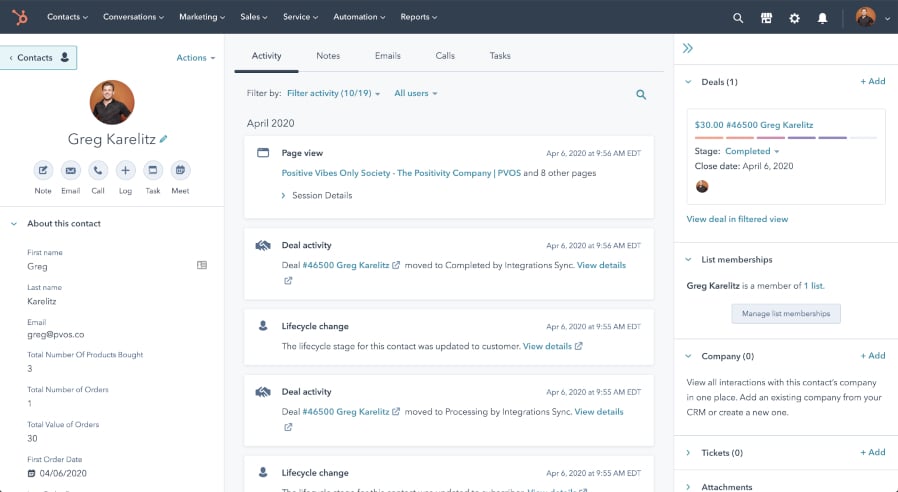
HubSpot CRM also integrates with the rest of HubSpot's marketing suite, allowing you to quickly set up calls to action (CTAs) or contact forms that automatically add data to your contact list when someone submits an enquiry.
Then there’s HubSpot CRM’s ability to generate lists of contacts based on customisable criteria like the number of web pages they’ve visited or the number of times they’ve visited your site. These features are incredibly powerful because they allow you to sift out people who aren’t interested in your offering and create a master list of prospective visitors who are just on the cusp of reaching out.
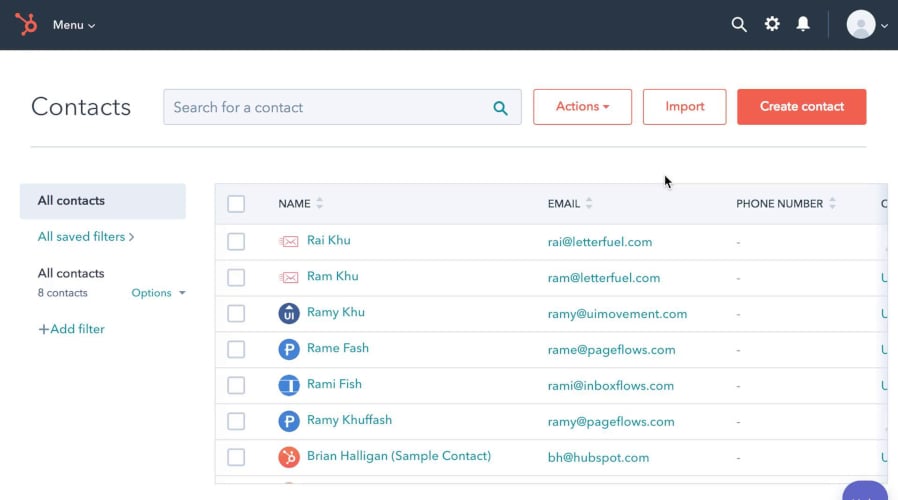
Then it’s just a case of popping across to the sequences section of the dashboard so you can build a custom workflow that tells your sales team how (and when) to start a conversation with those pre-engaged customers.
Or opening up the marketing hub and creating a custom email campaign triggered by data held in your CRM.
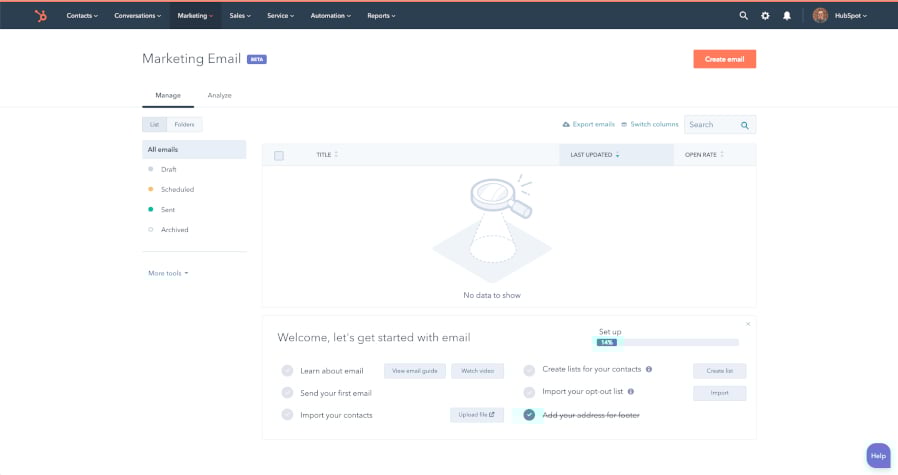
It’s powerful stuff, and it’s incredibly accessible to boot. Even if you’re brand new to this whole CRM thing.
HubSpot CRM is Affordable Too
You’d be forgiven for thinking that software like this probably costs the earth. It certainly should, but you can actually access much of this functionality for free. Yep, you read that right; you can get a light version of HubSpot’s CRM that’s totally free.
You’ll be missing a bit of functionality (and customisation), but it’s still a great way to get to grips with the software and work out whether it's right for you.
Now, we’re pretty confident you’ll want to move on to the paid version quickly, but we certainly won’t pressure you into it. A fair few of our clients have stuck with the free versions of HubSpot software, and they get plenty of value out of the basic features on offer.
The important thing is to start using the CRM functionality to refine your sales process and squeeze more money out of your marketing funnel. Not sure how best to do that? We’re always here to help.
We’re certified HubSpot partners, and we’ve helped several B2B businesses integrate HubSpot CRM into their marketing stack. We’ve also got first-hand experience using the HubSpot CRM to support our own growth, so we’re well placed to provide training, advice and insight based on first-hand experience. If you've read this and you’re keen to give the platform a go, make sure you shoot us an email.
Frequently Asked Questions
Why should marketing teams care about CRM software?
Marketing teams are increasingly being measured on revenue, not just traffic or leads. A CRM connects marketing activity to sales outcomes, so you can see which campaigns are actually generating customers — not just enquiries. With the rise of RevOps and cross-departmental accountability, having visibility over the full pipeline makes it much easier to justify marketing spend and demonstrate real impact.
What does HubSpot CRM do?
HubSpot CRM automatically creates contact profiles when someone fills in a form, imports information about their role and employer, and tracks their website activity before and after they get in touch. It gives your whole team visibility over the sales pipeline, lets you build segmented contact lists based on behaviour, and connects directly to HubSpot's marketing tools — so you can trigger email sequences or sales workflows based on real data.
Is HubSpot CRM free?
Yes — HubSpot offers a free version of its CRM that includes a solid range of core features. It's a genuine way to get started and understand whether the platform suits your business, without any upfront commitment. Most businesses find they want to move to a paid plan once they've seen what's possible, but the free tier provides real value and some clients stick with it long-term.
How does HubSpot CRM integrate with marketing tools?
HubSpot CRM integrates directly with HubSpot's marketing suite, which means contact forms, calls to action, email campaigns, and workflows all connect to the same contact database. When someone fills in a form, their data flows straight into the CRM. From there, you can trigger automated email sequences, assign sales tasks, or segment contacts into lists based on their behaviour — all without switching platforms.
Do I need a HubSpot partner to set up the CRM?
You don't need a partner to get started — HubSpot is designed to be accessible, even if you're new to CRM software. That said, a certified HubSpot partner can help you set it up in a way that connects properly to your marketing stack and reflects how your sales process actually works. Partners also bring hands-on experience from implementing the platform across different B2B businesses, which shortens the learning curve considerably.